Here’s why “how many acoustic panels do I need?” misses the point.
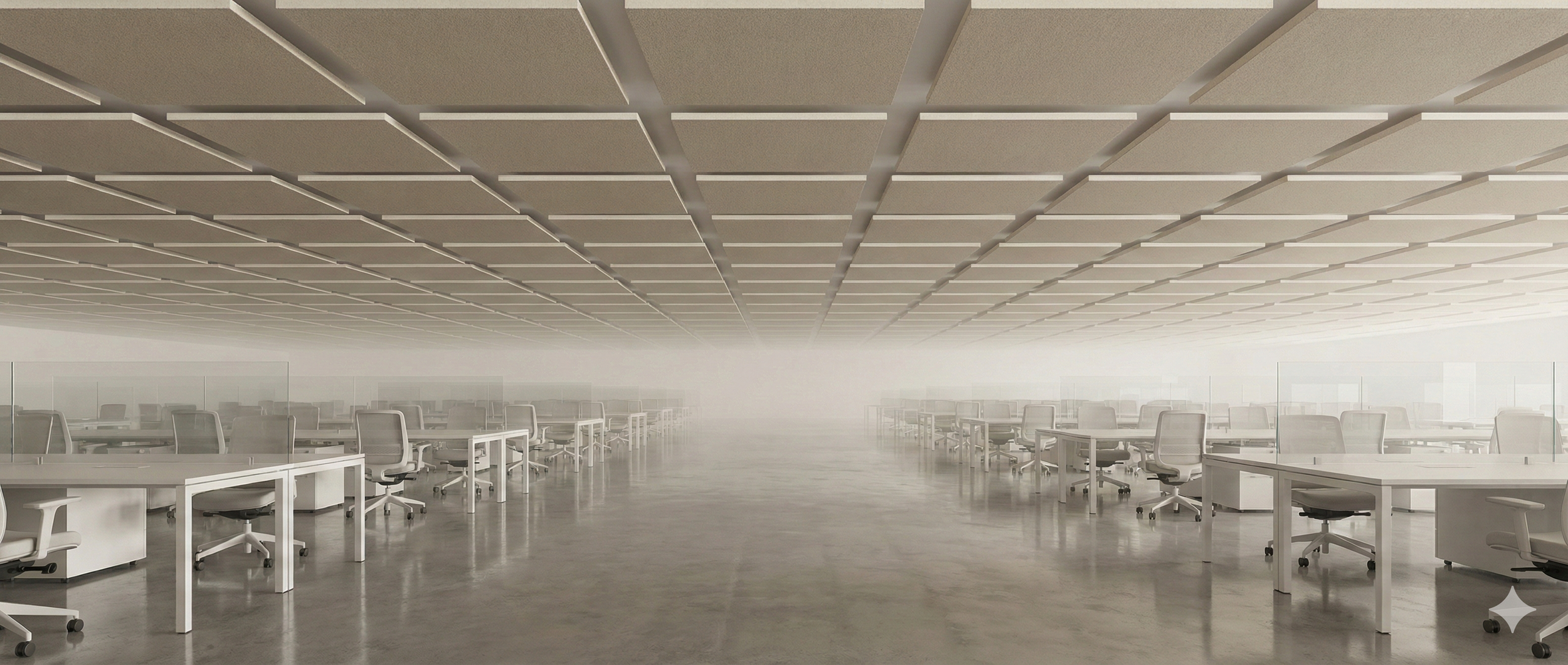
One of the most common questions in room acoustics is deceptively simple:
“How many acoustic panels do I need?”
The short answer is: it’s the wrong question.
Absorption Is About Energy, Not Objects
Good acoustic treatment isn’t about panel quantity, aesthetics, or guesswork. It’s about how much sound energy is absorbed in a room, at which frequencies, and where. Once you understand that, choosing the correct product and using it effectively, becomes far clearer.
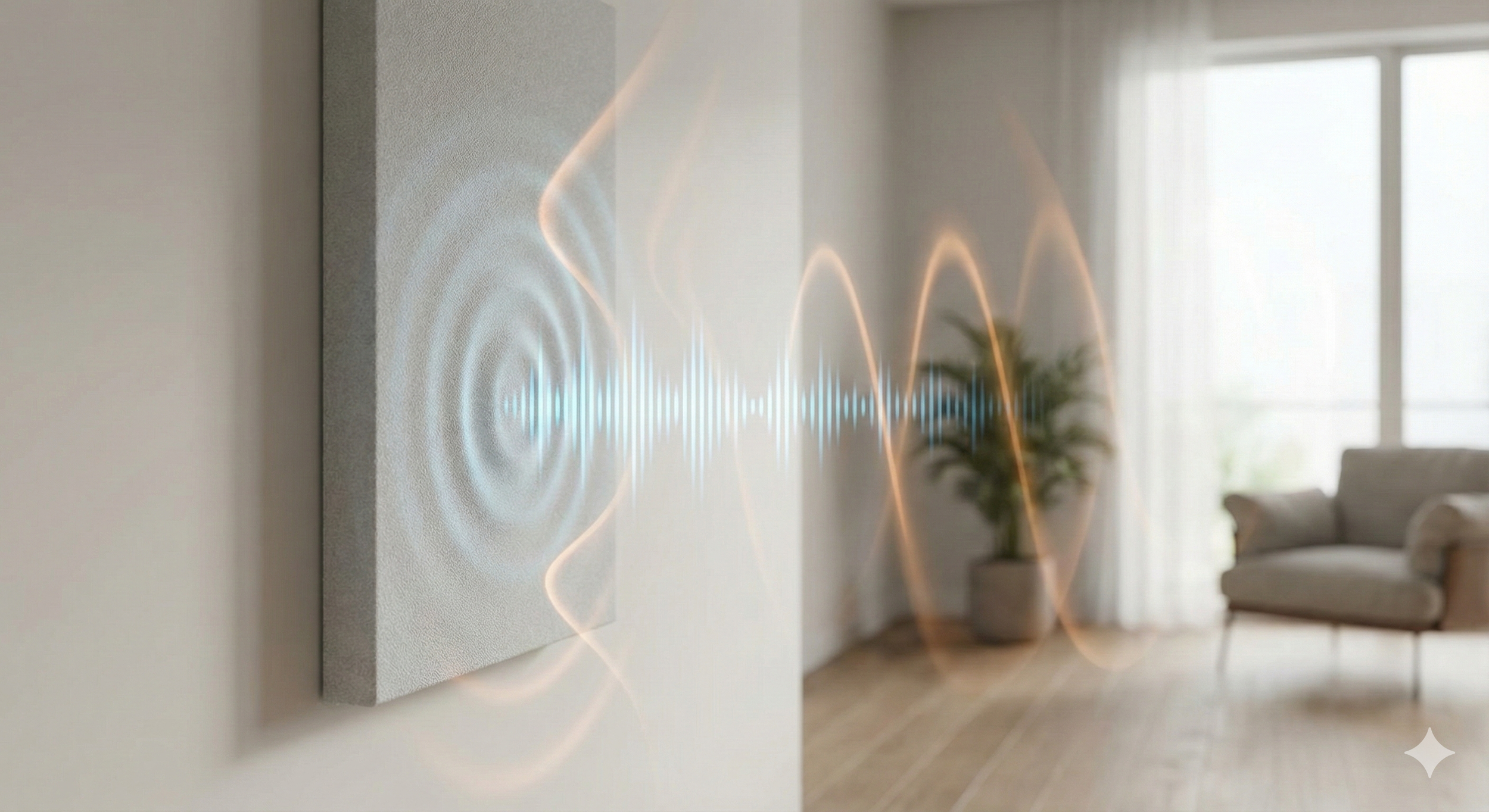
Sound behaves as energy moving through air. When it hits a surface, one of three things happens:
It reflects back into the room
It passes through the surface
It is absorbed and converted into heat
Acoustic treatment exists to absorb excess reflected energy, reducing reverberation, echo, and frequency buildup. Importantly, the room doesn’t care how many panels you installed, it only “responds” to how much sound energy is removed from the space. That’s why two rooms with the same number of panels can sound completely different.
The Science: Absorption Coefficients
Every acoustic material has an absorption coefficient, usually expressed as a value between 0.0 and 1.0:
0.0 = reflects all sound
1.0 = absorbs all sound (theoretical maximum)
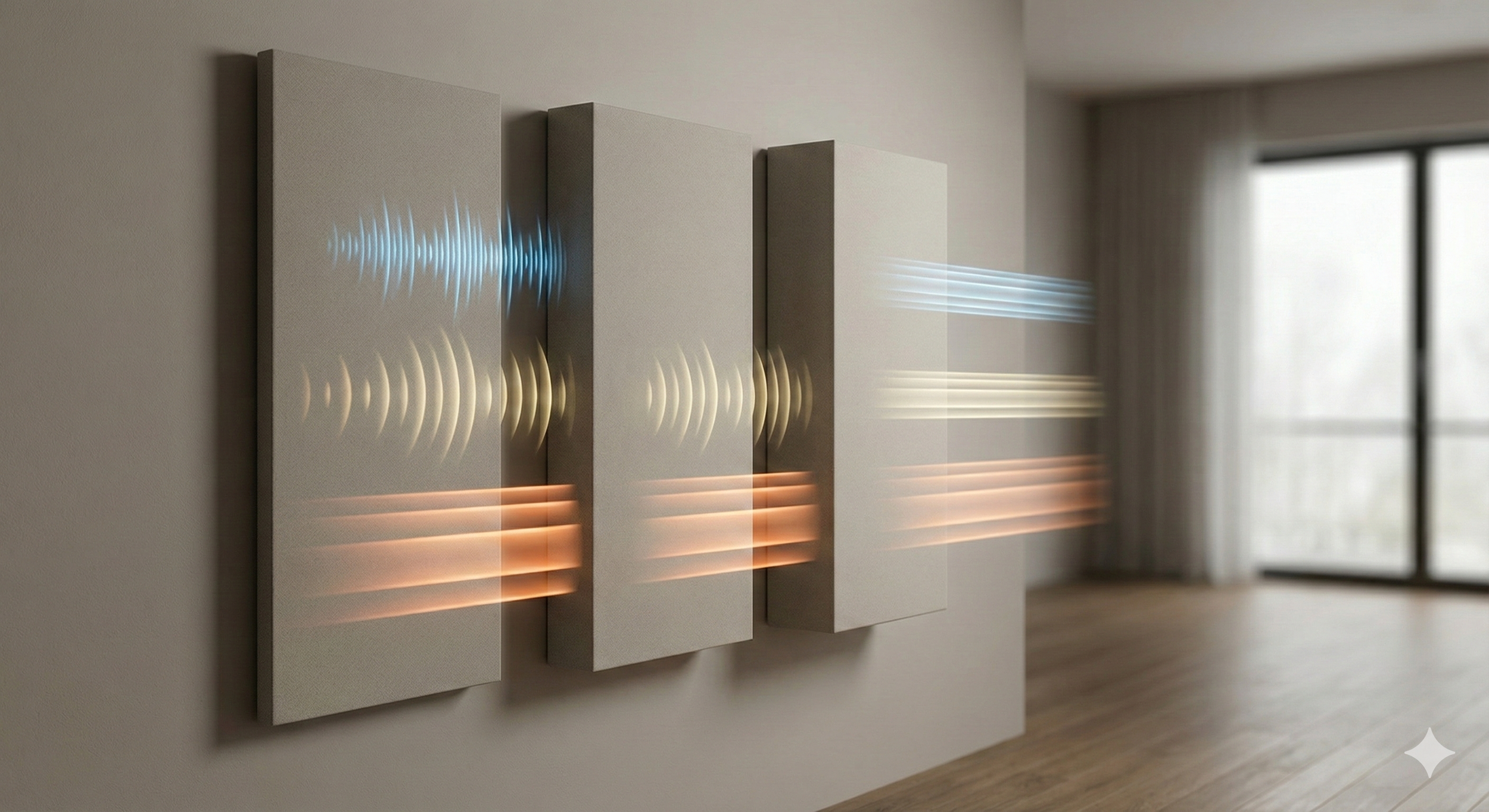
These values vary by frequency, meaning a panel might absorb high frequencies well but do very little for bass.
For example:
A thin foam panel may absorb 70–90% of high frequencies
The same panel may absorb less than 20% of low frequencies
So while it may reduce echo or “flutter,” it won’t fix boomy bass, muddiness, or low-end buildup.
Why Thickness Matters More Than Count
Low frequencies have longer wavelengths, which means they physically require more material depth to be absorbed effectively.
As a general rule:
Thin panels (25–40mm) → mainly high frequencies
Medium panels (50–75mm) → mids and some upper bass
Thick panels (100mm+) → meaningful low-frequency absorption
Adding more thin panels does not equal the performance of fewer thick panels. If the material cannot interact with the full wavelength of the sound, absorption simply doesn’t happen.
This is why bass traps are thicker and why adding decorative panels alone often leaves rooms sounding unbalanced.

Coverage: Treating the Room, Not the Walls
Another key factor is coverage, not wall decoration. Acoustics is about reducing overall reflected energy in the room. That means:
Treating first reflection points
Managing corners, where bass naturally builds up
Distributing absorption so sound decays evenly
Covering 20% of a room with highly effective absorption can outperform covering 50% with ineffective material.
The goal isn’t to “dead-en” the room, but to control decay time (RT60) so speech, music, or monitoring is clear and balanced.
Different Rooms Need Different Solutions
A podcast booth, home studio, open-plan office, and restaurant all have very different acoustic problems. Speech-focused spaces need mid-frequency control for clarity Music rooms require broadband absorption to avoid tonal imbalance Large, lively spaces often need a mix of wall, ceiling, and low-frequency treatment
There is no universal panel size or quantity that works everywhere. The correct solution depends on:
Room volume
Intended use
Existing surfaces
Problem frequencies
So… How Do You Know You’re Choosing the Right Product?
Instead of asking “How many panels do I need?”, ask:
What frequencies am I trying to control?
How much absorption does my room currently have?
What thickness is required for those frequencies?
How much total surface area needs treatment?
When those questions are answered, the right product, and the right amount becomes obvious. Acoustic treatment isn’t about filling walls with panels. It’s about engineering the right balance of absorption for the space you’re in.
When you focus on absorption performance, thickness, and coverage, you stop guessing and start solving the real acoustic problem.

How ISS Acoustic & Interiors Can Help
At ISS Acoustic & Interiors, we specialise in transforming commercial spaces into calm, focused, and productive environments.
Custom acoustic solutions to meet BB93 standards
We create environments where students learn better and teachers teach more comfortably.
Contact Us today to arrange a Free Consultation or discuss how we can improve the sound of your school.