Sound, Sensory Processing and Inclusive Spaces: Why Acoustics Matter
Voices overlapping, footsteps echoing across the floor, background noise coming from every direction. A T-shirt that feels too tight, the smell of food coming from the kitchen, or a room that is four degrees too hot.
For some people, these might be minor frustrations. For others, they can make an everyday environment tiring, overwhelming and difficult to navigate. The way we experience our senses is not the same for everyone. Factors such as age, hearing ability, sensory sensitivities and our surroundings can all influence how comfortably we process the world around us.
Our sensory experiences span a broad spectrum. Certain noises, lights, tastes, smells, temperatures, textures or activities can be enjoyable and comforting to one person, yet unpleasant or distressing to another. What feels insignificant to some can have a considerable impact on someone else's ability to feel comfortable, concentrate or participate in everyday activities.
Understanding Sensory Needs
These differences are more common than many people realise. NHS England reports that research has found sensory sensitivities in approximately 69–90% of autistic people. These can include heightened sensitivity to sensory information, reduced sensitivity, or a strong interest in particular sensory experiences.
Sensory needs are also relevant beyond neurodivergence. According to the charity RNID, more than 18 million people in the UK are deaf, have hearing loss or tinnitus. For people who struggle to distinguish speech from background noise, the acoustic environment can make a significant difference to everyday communication.
Although these figures describe different experiences rather than one overall measure of sensory needs, they highlight why the environments we create deserve greater consideration.
Understanding sensory needs means recognising that accessibility is not just about physical access. It is also about how comfortably people can experience, understand and interact with the world around them.
How Acoustics Can Support Sensory Wellbeing
At ISS Acoustic & Interiors, sound is the sensory experience we understand best. We work across a range of industries, helping to improve the acoustic performance of spaces through considered design, manufacturing and installation.
Throughout our work, we've experienced rooms where sound is carefully balanced, alongside spaces where reverberation times have measured up to four times what would be considered appropriate for their intended use.
The difference can be striking. Excessive reverberation and overlapping conversations can make a space feel loud, tiring or uncomfortable. For people who are particularly sensitive to sound, this can become a significant barrier to using the space. For others, the impact may be less obvious, with the additional effort required to listen and communicate going largely unnoticed.
This highlights an important point: we don't all experience our surroundings in the same way, and the environments we create can have a real influence on how people feel and function within them.
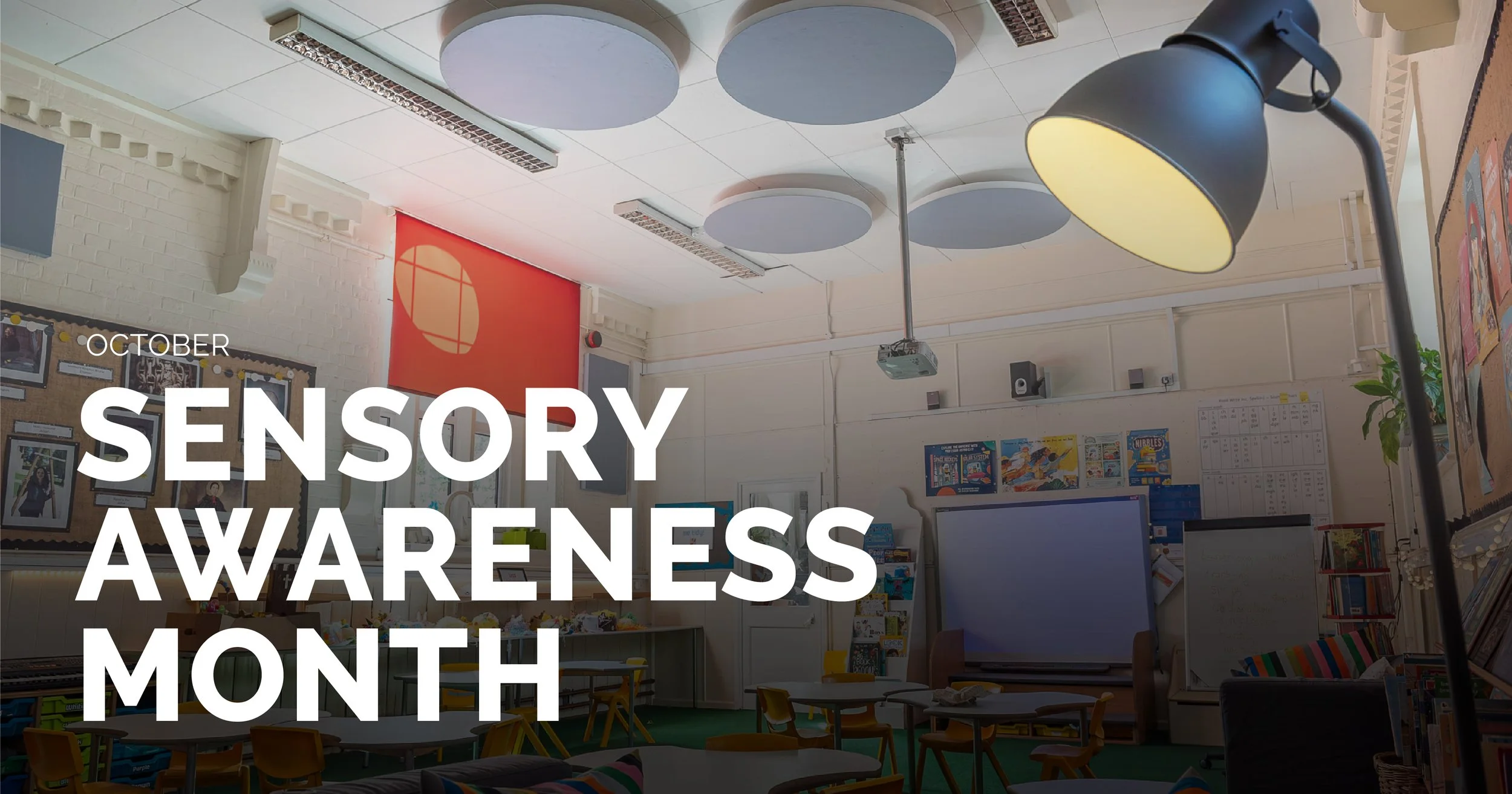
October's Sensory Awareness Month provides an opportunity to consider how the spaces we design, build and use affect people with different sensory needs. While sensory processing is complex and varies from person to person, one factor we can directly influence is the acoustic environment.
By reducing excessive reverberation, managing unwanted noise and improving speech clarity, thoughtful acoustic design can help create spaces that are more comfortable, accessible and easier to use.
Building regulations and acoustic standards have helped establish minimum expectations for sound insulation and acoustic performance in certain types of buildings, including schools. However, compliance should be more than another box to tick. Understanding why these standards exist, and how sound affects the people using a building, is essential to delivering spaces that work in practice.
At ISS Acoustic & Interiors, we believe good acoustics should be considered an essential part of how a space functions, not simply an additional feature of its design. The goal should not just be to meet the requirements of a building, but to create environments where people can communicate, concentrate and feel comfortable.
Building Regulations and the Work Still to Be Done
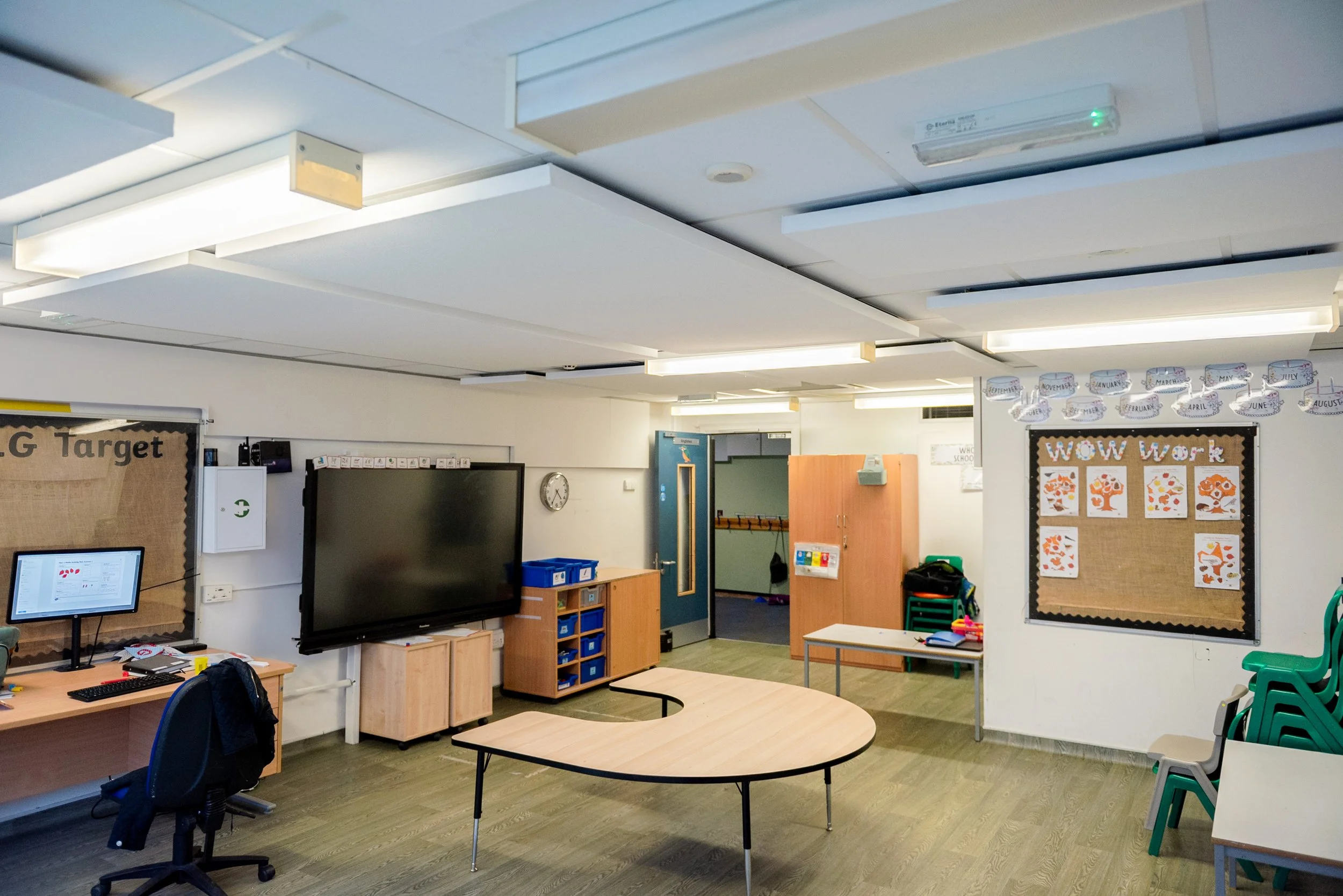
Acoustic design is increasingly recognised as an important part of creating functional, accessible buildings. In England, Approved Document E addresses resistance to the passage of sound, while Building Bulletin 93 (BB93) sets acoustic performance standards for schools. Both provide an important framework for ensuring that sound is considered as part of building design.
Research published in 2015 examined 185 spaces across 13 secondary schools in England. It found that 87% of spaces built after acoustic regulations were introduced in 2003 met the relevant noise and reverberation criteria, compared with just 44% of spaces built beforehand. Across all spaces surveyed, only 52% met both criteria.
This demonstrates the positive impact regulation can have, but also highlights the work still to be done.
Compliance should be the starting point, not the finish line
Building regulations can sometimes be viewed as another hurdle in an already complex construction process. However, when acoustic performance becomes simply another box to tick, we risk losing sight of the people who will ultimately use the building.
For a child struggling to follow their teacher, an autistic pupil overwhelmed by competing sounds, or an older person finding conversation difficult, the acoustic environment can have a meaningful impact on everyday life.
At ISS Acoustic & Interiors, we believe acoustics should be considered from the outset, rather than addressed only when problems arise. Meeting relevant standards is essential, but the wider goal should be to create spaces where people can communicate, concentrate and participate comfortably.
Regulations provide the foundation. Understanding their purpose and designing around the people who use our buildings is what makes the real difference
The Future of Soundscapes for People with Sensory Needs
As our understanding of sensory processing develops, so too should our approach to the spaces we create. Buildings are not simply structures to occupy; they are environments where people learn, work, communicate, socialise and spend much of their lives. The sounds within these spaces can influence how comfortably people experience them.
The future of acoustic design should be about more than reducing echo or meeting building regulations. It should involve a greater understanding of how different people experience sound, and how thoughtful design can help create environments that are more inclusive from the outset.
This means considering acoustics earlier in the design process, selecting appropriate materials, managing unnecessary background noise and assessing how spaces will be used in practice. In schools, this could mean making it easier for pupils to follow lessons. In community buildings, it could mean helping people participate more comfortably in conversations and activities. In workplaces, it could mean creating environments that better support concentration and communication.
There is no single acoustic solution that will meet everyone's needs. However, combining good acoustic design with thoughtful layouts, quieter areas and an understanding of individual sensory requirements can help reduce avoidable barriers.
At ISS Acoustic & Interiors, we believe that sound deserves the same consideration as lighting, ventilation and other essential elements of building design. Through considered acoustic assessment, bespoke manufacturing and professional installation, we aim to help create spaces that work better for the people who use them.
Better soundscapes are not simply about making spaces quieter. They are about making them more comfortable, more accessible and more inclusive.
By placing people at the centre of acoustic design, we can move towards a built environment where everyone has a better opportunity to learn, work, communicate and feel comfortable in the spaces around them.
References and Further Reading
NHS England — Sensory-friendly resource pack.
https://www.england.nhs.uk/long-read/sensory-friendly-resource-pack/
RNID — Why the number of people with hearing loss has increased.
https://rnid.org.uk/2024/06/why-the-number-of-people-with-hearing-loss-has-increased/
Shield, B. and colleagues (2015) — A survey of acoustic conditions and noise levels in secondary school classrooms in England.
https://pubmed.ncbi.nlm.nih.gov/25618049/
GOV.UK — Approved Document E: Resistance to sound.
https://www.gov.uk/government/publications/resistance-to-sound-approved-document-e
Department for Education — Building Bulletin 93: Acoustic design of schools — Performance standards.
https://www.gov.uk/government/publications/bb93-acoustic-design-of-schools-performance-standards
Department for Education — Design guidance: Building bulletins.
https://www.gov.uk/government/collections/design-guidance-building-bulletins

Could your space benefit from better acoustics?
At ISS Acoustic & Interiors, we specialise in transforming spaces into calm, focused, and productive environments.
Custom acoustic solutions to meet BB93 standards
Whether you're responsible for a school, workplace, community building or refurbishment project, ISS Acoustic & Interiors can help you explore ways to improve acoustic comfort and speech clarity.